
Beyond the Law: The U.S.-Israeli Attack on Iran and Its Threat to Global Order
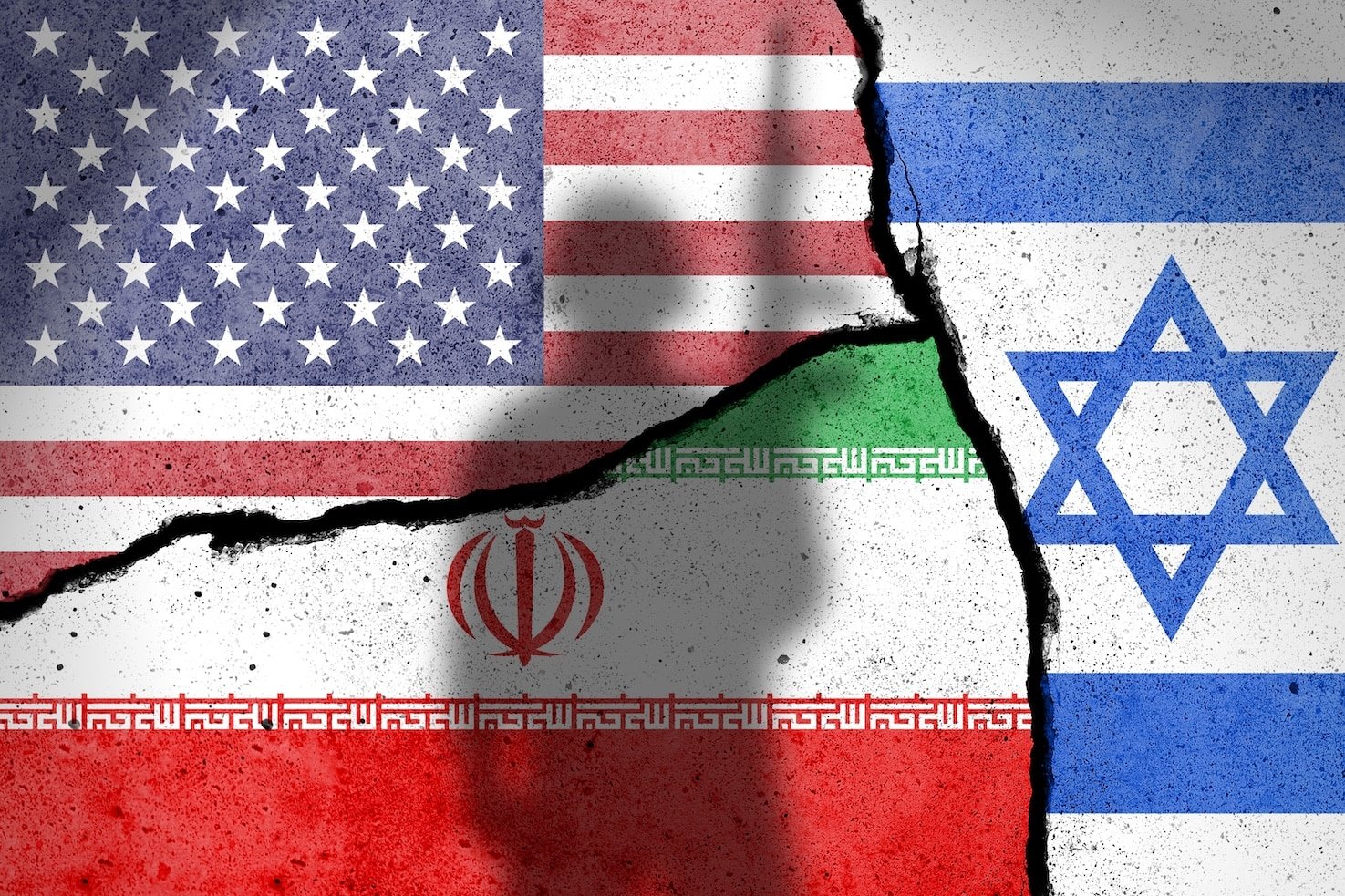
Unchecked power and selective rules are dragging the world toward escalating wars and nuclear disaster.
By Mohammed Affan
As a student trying to make sense of international politics, it’s hard not to feel a growing sense of betrayal. The recent ceasefire between Israel and Iran, brokered by the United States and Qatar, may have paused the violence, for now, but it has not restored any real sense of order. What it has done, instead, is expose how fragile and uneven the global system really is. The laws and institutions we’re told exist to protect peace and justice seem absent when they’re needed most. For many of us watching from outside the centres of power, it’s clear: the so-called global order works differently depending on who you are, and that double standard is becoming impossible to ignore.
The United States’ participation in Israel’s attack on Iranian territory marks a serious violation of both the UN Charter and international law. It signalled to the world that the very nation “tasked” with upholding the rules-based international order is willing to bypass both global norms and its own democratic institutions when it is convenient. This erosion of legal and moral credibility undermines not only the United States’ role as a global standard-bearer but also further destabilizes an international system already weakened by selective enforcement and political double standards. Israel’s unprovoked attacks on Iran—a sovereign state and signatory to the Non-Proliferation Treaty—highlight the deep flaws within the global security framework, especially given that Israel itself is not a signatory to the treaty. Such actions reveal how adherence to international agreements is often overlooked when convenient, which undermines efforts to maintain peace and security. Rather than encouraging stability, these assaults exacerbate regional tensions and expose the limited capacity of international institutions to prevent or respond effectively to violations of the existing international system.
Whose sovereignty counts?
The contrast between the world’s reaction to this strike and its response to Russia’s invasion of Ukraine makes clear the breakdown in the credibility of any consistent or principled international order. In Ukraine’s case, violations of sovereignty were swiftly condemned, sweeping sanctions were imposed, international institutions were mobilized and military and humanitarian aid flowed freely to support a nation fighting for its survival. Yet when Iran, also a sovereign state, was struck without provocation, not only was there no comparable outcry, but key actors, including the United States, actively participated. Iran was warned against retaliation, while Israel, which attacked many countries in the last two years, faced no consequences. For civilians caught in the crossfire, the message is chilling: their safety, their sovereignty, and even their right to peace depend not on justice, but on politics. The double standard is clear. The implementation of international law now relies more on who the actor is than on the nature of the act itself. This selective morality diminishes the credibility of the rules-based system and reinforces the idea that global norms are not universal, but rather instruments of geopolitical convenience.
Structural weakness and institutional paralysis in crisis response
The limitations of institutions such as the UN Security Council and the IAEA further aggravate this crisis and have significant consequences for the very structure of the international order. When these entities fail to take decisive action, whether because of bureaucratic inertia, political stalemate or the conflicting interests of influential member states, the outcome is a gradual decline in trust in multilateralism and in the principles that are meant to underpin global governance. Likewise, the IAEA’s restricted enforcement abilities and its reliance on state cooperation weaken efforts to curb nuclear proliferation, thus amplifying the risk of global instability. Given the sensitive backdrop of Iran-Israel tensions, Iran accused the IAEA of using provocative and misleading language, particularly regarding uranium enrichment levels and compliance issues and highlighted that such phrasing created a pretext for Israeli and American attack on Iran. Ironically, the IAEA President Rafael Grossi, later said in an interview with Fareed Zakaria that, “I indicated that we did not have elements to prove that Iran has a plan or a systematic effort towards building a nuclear weapon.” During periods of increased volatility, clear communication is not merely beneficial; it is crucial. This dysfunction leads states to undertake unilateral measures or create exclusive alliances and thereby further fragment the international system and intensifying great power rivalries.
The impact of this growing disorder is reflected unambiguously in the 2025 Stockholm International Peace Research Institute (SIPRI) report, which warns that the world’s nine nuclear-armed states are not only maintaining but actively modernizing and expanding their arsenals. Of the estimated 12,241 nuclear warheads globally as of January 2025, approximately 9,614 are held in military stockpiles, with about 3,912 already deployed on missiles and aircraft. Alarmingly, around 2,100 of those are kept on high operational alert, ready to launch at a moment’s notice. These numbers aren’t just cold statistics—they tell a troubling story about the world we’re heading towards. They reflect a shift away from dialogue and restraint, and toward a dangerous new chapter of nuclear posturing. It’s a reminder that when global institutions fail to do their job, the world becomes a far more unstable and frightening place.
From intervention to instability
From NATO’s intervention in Yugoslavia, to the invasion of Iraq, the prolonged conflicts in Syria, Russia’s war on Ukraine, rising tensions over Taiwan, the India-Pakistan standoff, and Israel’s assault on Gaza and attacks on other countries, we are witnessing a pattern of unilateral or unresolved military actions. These conflicts typically leave behind disintegrated societies and hazardous power vacuums, where governments collapse, law and order vanish, and everyday individuals must survive amidst chaos.
In these voids, extremist groups gain ground—not just ISIS, but also armed militias in places like Libya, Yemen, and the Sahel region. When wars are left unresolved and the international community fails to act decisively, what fills the gap isn’t peace—it’s fear, violence, and a growing sense of hopelessness that allows extremism to take root and spread. The inability of international institutions to prevent or resolve these crises is not just a flaw in the system—it is a growing threat to global peace and human security.
Ultimately, the failure of these institutions to uphold their mandates not only compromises peace and security but threatens to loosen the cooperative frameworks essential to managing the existential threats in an increasingly interconnected world.
In today’s world, the unchecked ability of powerful nations to unilaterally wage war against weaker ones poses a grave threat to humanity and global stability.
The overlooked crises of governance and justice
To begin addressing this disorder, the world needs honest, inclusive dialogue that brings together diverse voices—especially those from the Global South, who are too often left out of decision-making yet bear the brunt of global instability. We must move beyond outdated power structures and build institutions capable of upholding justice, preventing conflict, and holding aggressors accountable. This isn’t about abandoning the global order—it’s about fixing what’s broken before the cost becomes unbearable. The challenge before us is to see if a just and peaceful global order is possible in a multipolar world.
Restoring balance: Climate, justice, and global governance
The idea is not aimed at dismissing the global order and institutions altogether. Rather, it is a call to broaden our understanding of what is wrong with the prevailing systems, thus threatening humanity and drawing the solutions and alternatives. While climate change rightly receives global attention for its existential implications, we must also recognize that the failures, flaws, and unchecked impunity within the current international system can—and already do—result in tremendous human suffering and loss. If we are serious about securing the future of humanity, we must place equal urgency on fixing the disorder in global politics as we do on saving the climate. Because when international institutions fail, and justice becomes optional, we begin to slip into a world where the “law of might” replaces the “might of law”—and that is a future no one can afford.