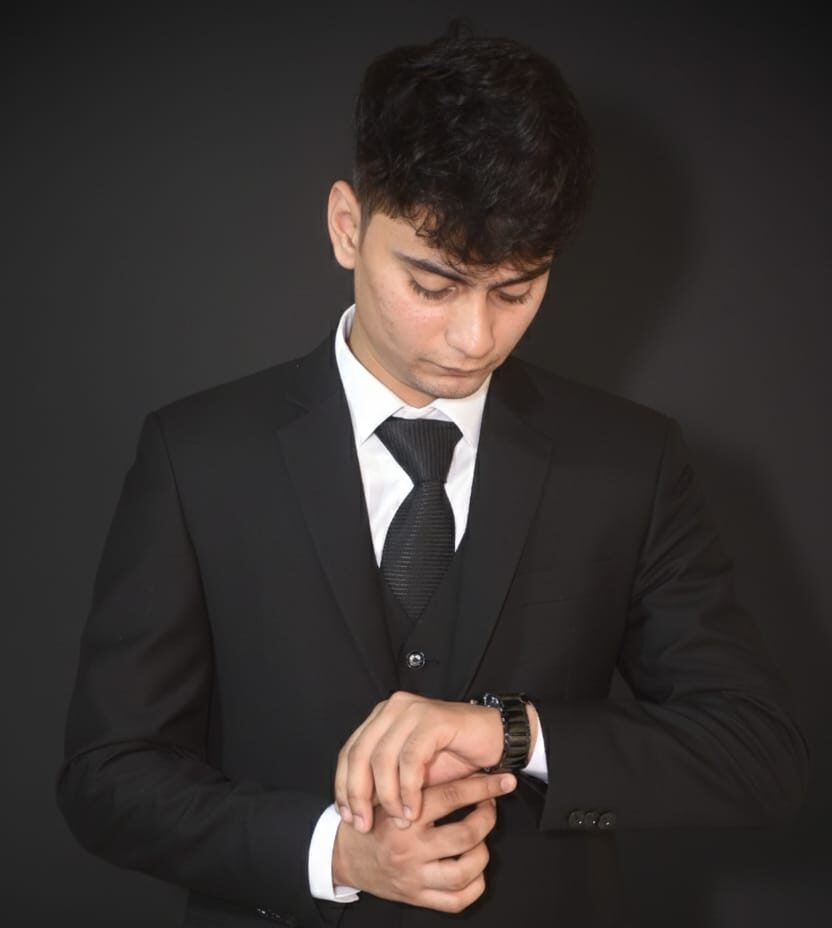
Youth Urges UN Overhaul: An Interview with Mohammed Affan amid the 80th UNGA
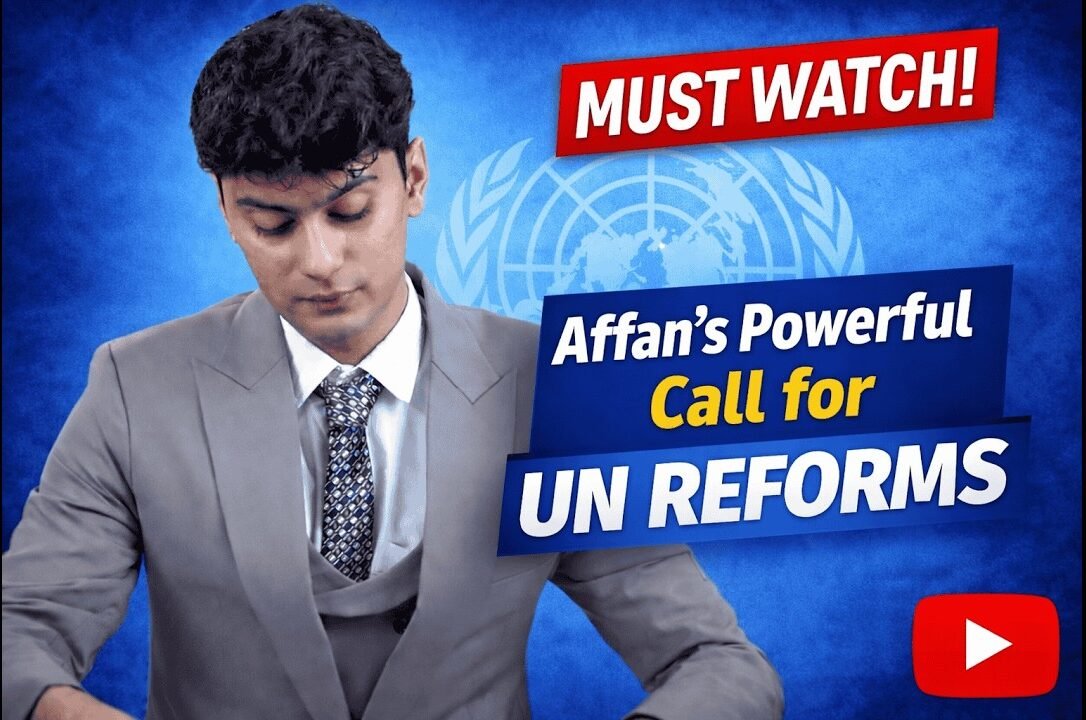
At the 80th United Nations General Assembly (UNGA), world leaders addressed war, peace, climate, technology, and justice. In parallel, Mohammed Affan, an Indian student of Political Science and International Relations with studies in India, Turkey, and Poland, released a recorded message calling for urgent, structural UN reforms.
He highlighted five pillars: peace and security, development and finance, digital governance, revitalizing multilateralism, and institutional reform. Affan also contributes articles on international affairs across platforms.
Your message to the UN was not a live address but a recorded one circulated to UN officials and shared online. Why did you choose that route?
That’s correct. I wasn’t on the official speakers’ list, so I chose to record the message. It allowed me to carefully shape my arguments, bypass traditional diplomatic gatekeeping, and reach a wider audience. Social media can amplify youth voices that might otherwise remain unheard. Its impact depends on how much resonance it finds with civil society, policymakers, and the media. I hope that it sparks debate and pressures decision-makers from outside the usual corridors of power.
I also invite students and young people to record their own messages and share them with me. These are featured on my YouTube channel, The Globalist. I started The Globalist as a platform where youth from around the world can analyze, debate, and influence global governance and geopolitics. It empowers students and young professionals to share insights, research, and solutions, connecting their voices with policymakers, academics, and the wider public.
In that message, you said the UN is at a crossroads and “incremental reforms will no longer suffice.” Why such urgency?
Because the facts demand it. We are seeing more than 120 armed conflicts, displacement on an unprecedented scale, protectionism rising, and record levels of global military spending. This is not business as usual. If the UN continues tinkering at the margins while the world burns, its legitimacy will collapse. My language was urgent because reality is urgent.
Your speech outlined five reform priorities. If one cannot wait, which is it?
Security Council reform. The Council is supposed to safeguard peace, but is paralyzed by outdated structures and the misuse of veto. Gaza and Ukraine are clear examples of what happens when the Council cannot act. We need to limit vetoes in humanitarian crises and bring in permanent representation for Africa, India, and other major voices. Without this, the UN risks irrelevance.
Several world leaders at the 80th UNGA expressed concerns about the UN’s effectiveness. Did any of their speeches resonate with your message?
Absolutely. Finland’s President highlighted that Security Council paralysis undermines UN credibility and suggested revisiting veto power. The African Union stressed that Africa must not remain excluded from permanent membership, and Turkey reiterated that “the world is bigger than five.” On technology, President Zelensky warned of an escalating AI and drone arms race, reinforcing the need for UN oversight on digital governance. Even China called for reforms to make global governance “more just and equitable.”
India’s External Affairs Minister, S. Jaishankar, declared that “the UN is in a state of crisis,” citing gridlock on terrorism, development, and human rights, and called for a representative Security Council. My message seeks to connect youth and civil society perspectives to these broader calls for accountability, fairness, and inclusivity in UN reform.
You also put human suffering at the center: Gaza, Ukraine, Syria, Sudan. Why highlight that dimension?
The UN was created after the Second World War to prevent another war and, ultimately, to protect human lives. Numbers aren’t just statistics; they are children, families, and teenagers whose lives are torn apart. A child in Gaza, a family in Ukraine, a teenager in Syria or Sudan, these are human stories, not abstract data. The UN’s charter speaks of saving “succeeding generations from the scourge of war.” That mission cannot remain rhetorical; it must translate into real protection for real people, here and now.
Some of your remarks were bold, like citing ICC warrants for leaders of both Israel and Russia. Were you concerned it might come across as provocative?
I was aware it might be provocative, and I could have chosen a more diplomatic approach, but I prefer conviction over caution. If international law is applied selectively, it loses its meaning. The ICC has demonstrated that even powerful leaders are not above scrutiny. Yet without effective enforcement, justice risks becoming symbolic. As youth, our role is to speak clearly where others hesitate: the law must be consistent, not dependent on geopolitics. When the rule of law fails, the rule of the jungle takes its place.
Beyond peace and justice, you argued for development and finance reforms, automatic debt relief in crises, fairer representation in global financial institutions. How does that connect to UN legitimacy?
Legitimacy is tied to fairness. If countries spend more on debt repayments than on hospitals and schools while rich states lecture them, the imbalance is glaring. Initiatives like the Bridgetown Agenda show pathways, but they need political will. Without correcting these inequities, alternative models will emerge outside the UN, fragmenting the world order further.
Let’s return to veto reform. Powerful states guard veto privileges fiercely. What strategies do you see for overcoming resistance?
It requires an Amendment to the UN Charter. It won’t be easy, but there are pathways:
- Thresholds: requiring supermajorities for vetoes in humanitarian crises.
- Normative pressure: if a critical mass of states and civil society declare veto immunity in cases of genocide or war crimes, the political cost rises.
- Linking incentives: tying aid, legitimacy, or other reforms to acceptance of veto limits.
- Public diplomacy: youth and civil society mobilization can make vetoes harder to defend at home.
The goal is a shift from seeing the veto as untouchable to seeing it as indefensible in the face of mass human suffering.
Beyond institutions, you’ve also spoken about digital governance. Did you face any algorithmic hurdles when trying to publicize your speech?
Yes. I noticed that some content, especially on sensitive geopolitical topics, can face algorithmic restrictions that limit reach. Still, I couldn’t avoid mentioning ICC warrants, because global governance cannot function if international law is applied selectively. That’s why I encourage young people, and anyone who shares these concerns, to help amplify such messages so they reach decision-makers at the UN and audiences worldwide.
You ended your address by saying that excluding Palestinian delegates undermines the UN’s credibility. Why close on that note?
Because universality is the UN’s foundation. To call it a universal body while silencing Palestinians is a contradiction. If the UN wants to be “better together,” it must first be fair together. Overlooking one of the world’s longest and most painful conflicts erodes trust not just in the UN, but in the very idea of multilateralism.
Finally, what’s next for you? Do you see yourself as an activist, an academic, or a future diplomat?
I see my path in international civil service as a diplomat. My goal is to make global governance not just more public-centered, but also more accountable in concrete ways, from reforming veto use to advancing debt justice and digital governance. That means bridging the academy and policy, connecting the Global South with global institutions, and linking youth activism with formal diplomacy. I will continue to write, publish policy briefs, and build coalitions with youth networks. Whether inside the UN system or in global civil society, my generation cannot afford to be passive. We must take responsibility to reshape the institutions that will define our future. If the UN is to stay relevant, it must be as responsive to people as it is to power.